Search This Blog

Monday, 25 June 2012

If you are a temporary foreign worker

Canadian Experience Class
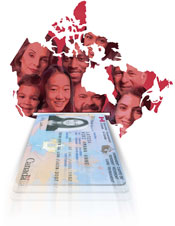
If you are a temporary foreign worker or a foreign student who graduated in Canada, you often have the qualities to make a successful transition from temporary to permanent residence. You are familiar with Canadian society and can contribute to the Canadian economy. You should have knowledge of English or French and qualifying work experience.
Applying to stay in Canada permanently in your case is simple. You can do this under the Canadian Experience Class. All the guides, information and forms you need to apply are included here.
Before you apply, make sure you get to know the requirements and current application procedures. After you apply, make sure you return to this website to find out about the steps that follow.
Learn about:
  • Who can apply
  • How to apply
  • After applying
  • Frequently asked questions
  • Canadian National Occupational Classification (NOC)
More Detail

Sunday, 24 June 2012

Employer Sponsored Workers


Overview

For lawfully operating Australian and overseas employers to sponsor and employ skilled workers who have recognised qualifications and skills/or experience in particular occupations required in Australia.
Visa Options
For skilled people to be employed in Australia on a temporary or permanent basis. Applicants for these visas seeking to work for an Australian employer must be sponsored by their employer.

Temporary Visas

For lawfully operating Australian and overseas employers to employ approved skilled workers for temporary vacancies in particular occupations required in Australia. Temporary visas can offer a pathway to a permanent visa.

Permanent Visas

For lawfully operating Australian employers to sponsor skilled workers in particular occupations required in Australia.


Friday, 22 June 2012

Student Visa Holders in People's Republic of China Travelling to Australia


From 1 April 2012, the department implemented arrangements that allow Chinese and other nationals in the People's Republic of China to travel to Australia on a Student visa without a visa label in their passport (a 'label-free' visa). These arrangements have been agreed with the Ministry of Public Security of the People's Republic of China.
The department requires all airlines to undertake an electronic check of departmental databases to ensure that a person holds an Australian visa before allowing a person to board a flight to Australia. This means that airlines should only allow a person to travel on a flight to Australia (whether direct from China or through a transit airport) when they are satisfied the person has permission to travel to and enter Australia as a result of this electronic check.
To ensure that a person understands the validity and conditions of their Student visa, the department will continue to issue all Student visa holders with a grant notification letter informing them of these details. The department does not consider the letter as evidence of the grant of a Student visa for the purpose of travel. In the absence of a confirmation through the electronic check, airlines have been advised not to rely on any letter as evidence of a person's permission to travel to and enter Australia.
The Ministry of Public Security has advised that they will only allow a person who has been granted a 'label-free' Student visa to depart China where they depart:
  • from an airport in mainland China travelling on a flight or flights, directly or indirectly, to Australia and hold a boarding pass for their final flight to Australia
  • mainland China transiting by land or ferry through the Hong Kong Special Administrative Region in order to travel on a flight or flights to Australia.
The Ministry of Public Security has advised that any person granted a label-free Student visa to travel to Australia will not be able to transit through the Macau Special Administrative Region, by land or ferry, to board an onward flight in Macau or Hong Kong.
If any person holding a Student visa has any queries about their visa conditions they should follow the advice in their grant notification letter.

More Detail

Wednesday, 20 June 2012

News Release — Amendments to the Protecting Canada’s Immigration System Act


Ottawa, May 9, 2012 — Minister of Citizenship, Immigration, and Multiculturalism Jason Kenney today announced that the Government is proposing amendments to Bill C-31, the Protecting Canada’s Immigration System Act.
“Over the past few weeks, I’ve listened to parliamentarians and witnesses,” said Minister Kenney. “We have always said that we were open to amendments that make Bill C-31 stronger and help us to fight human smuggling and to protect Canada’s immigration system. These amendments do just that, and make for a stronger bill.”
For example, some critics feared that the measures originally proposed in Bill C-31 with respect to the cessation of permanent residence status might be used in a way never intended by the Government. Others speculated that the Government would seek to remove permanent residence status from refugees who have become well-established in Canada, but whose rationale for refugee status ceases to exist due to improved conditions in their country of origin. The Government is introducing an amendment to clarify this section and to explicitly limit the application of this section of the legislation.
The proposed amendment would make it clear that where the Immigration and Refugee Board of Canada (IRB) determines that an individual’s protected person status has ceased to exist solely due to a change in country conditions, that individual would not automatically lose permanent resident status. This was the original purpose of the provision in the bill, and the new language should make that purpose clearer.
Under the Balanced Refugee Reform Act, individuals with a final negative decision from the IRB were barred from applying for a pre-removal risk assessment (PRRA) for 12 months. This is because a PRRA is duplicative of the IRB decision, and a core purpose of the bill was to reduce redundancy and unnecessary delays in the removal process for failed asylum seekers.
The government is proposing to amend this provision so that the 12-month bar will apply as soon as Bill C-31 receives Royal Assent. There is no reason to delay the application of this provision, and the proposed amendment ensures there will be no such delay. The effect of this proposed amendment will be that individuals who received a negative decision from the IRB, or abandoned or withdrew their refugee claim, or received a negative PRRA decision within the 12 months prior to the date of Royal Assent would be barred from applying for a PRRA until 12 months after that decision.
The proposed amendment would also increase the temporal bar from 12 to 36 months for those from designated countries of origin who have received a previous negative decision from the IRB, abandoned or withdrew their refugee claim, or received a negative PRRAdecision. This change will discourage failed asylum seekers from going underground and evading removal for 12 months, and recognises that country conditions and the threat of real persecution in a presumptively safe country are not likely to change in the course of 36 months. There is, however, a provision in the Balanced Refugee Reform Act that would allow the Minister to make exceptions to the bar on PRRA to quickly respond to sudden changes in country conditions.
Under the Protecting Canada’s Immigration System Act, the Government had initially proposed mandatory detention without review for up to 12 months for those who arrive as part of a designated irregular arrival. This would allow for the determination of identity, admissibility, or any other investigations to take place before members or irregular mass arrivals are released into the community. Persons would, however, be released from detention before 12 months, if they are found to be genuine refugees.
Opposition members have asked for amendments to this detention review schedule, so that these individuals would receive a review of their detention much sooner than initially proposed. They have, for example, suggested that a first detention review should occur within 14 days of detention, with subsequent reviews every 30 days. Other witnesses and critics of this provision of Bill C-31 have suggested other time periods, including an initial review shortly after detention, followed by subsequent reviews at least every 6 months.
After listening to parliamentarians, the Government is proposing a compromise, which would see a first detention review within 14 days and subsequent reviews after every 180 days. As before, a person would be released before this time, upon being found to be a genuine refugee. As an additional safeguard, the government will also propose an amendment to allow the Minister of Public Safety, on his own initiative and at any time, to release a detained individual when grounds for detention no longer exist.
"I believe that these amendments show that the Government is open to reasonable suggestions that improve our Bills," said Minister Kenney. "We have listened to parliamentarians on Bill C-31 and, as a result, we have a stronger bill that will continue to protect genuine refugees, while ensuring that bogus asylum seekers are detained, processed, and swiftly removed, and sending the message to human smugglers that targeting Canada will no longer pay."

More Detail

Tuesday, 19 June 2012

Business Skills Program Reforms – 1 July 2012

On 25 May 2012, the Minister for Immigration and Citizenship, the Hon Chris Bowen MP announced changes to the Business Skills visa program - now named the Business Innovation and Investment program. These changes will be implemented from 1 July 2012.
The changes are the result of a comprehensive review which was conducted during 2011.
See:
Reforms to the Business Skills Program ( 69KB PDF file)
Frequently Asked Questions Reforms to the Business Skills Program (139KB PDF file)
Diagram of Changes for the Business Skills Program (115KB PDF file)
Innovation Points Test ( 72KB PDF file)
Significant Investor ( 61KB PDF file)

Monday, 18 June 2012

Visas, Immigration and Refugees


  • Professionals and other skilled workers seeking work or business in Australia
  • People moving permanently to Australia or returning from overseas
  • Tourists, working holiday, people transiting, visiting family or friends, or visiting for business or an event
  • People studying or seeking study, training, or skills development in Australia
  • Education agents and providers
  • Employers who sponsor skilled people to work in Australia
  • Australia's Refugee and Humanitarian programs
  • Important information people should know about Australian visas

More Detail

Sunday, 17 June 2012

Why should I become a citizen?


Australian citizenship is an important step in your migration story. Becoming an Australian citizen means that you are making an ongoing commitment to Australia and all that this country stands for. It is also the beginning of your formal membership of the Australian community. It is the step that will enable you to say ‘I am Australian’.
Australian citizenship is a privilege that offers enormous rewards. By becoming an Australian citizen, you are joining a unique national community. Our country has been built on the combined contributions of our Indigenous people and those who came later from all over the world. We celebrate this diversity and at the same time, strive for a unified and harmonious nation.
The strength of the Australian community means that we work together to solve problems and to make Australia the great country that it is. We have a stable system of government and Australians respect the authority and laws of the government. Our stability, our culture and our laws have been shaped by our history. By joining the Australian community, you will inherit this history and you will be in a position to contribute to it.

Responsibilities and privileges of Australian citizenship

As a permanent resident of Australia, you have already enjoyed living in a free and democratic society. When you become an Australian citizen, you will have new responsibilities. You will also have a range of new benefits.
Responsibilities – what you will give Australia.
As an Australian citizen you must:
  • obey the law
  • defend Australia should the need arise
  • serve on a jury if called to do so
  • vote in federal and state or territory elections, and in a referendum
    See: Australian Electoral Commission  
Privileges – what Australia will give you.
As an Australian citizen you have the right to:
  • vote in federal and state or territory elections, and in a referendum
  • apply for work in the Australian Public Service or in the Australian Defence Force
  • seek election to parliament
  • apply for an Australian passport and re-enter Australia freely
  • receive help from an Australian official while overseas
  • register children born overseas as Australian citizens by descent.

Australia’s democratic beliefs, rights and liberties

At the citizenship ceremony, you pledge that you share Australia’s democratic beliefs and that you respect the rights and liberties of the people of Australia. 
Our democratic beliefs:
  • Parliamentary democracy
  • The rule of law
  • Living peacefully
  • Respect for all individuals regardless of background
  • Compassion for those in need
Our freedoms:
  • Freedom of speech and freedom of expression
  • Freedom of association
  • Freedom of religion and secular government
Our equalities:
  • Equality in Australia
  • Equality of men and women
  • Equality of opportunity